

An evening safari gives you sunset, dinner, and entertainment. A morning safari gives you dune bashing before the heat. An overnight deser safari in Dubai gives you both — plus the part of the desert that most visitors never see: the silence after the camp lights go out, the stars without light pollution, and a sunrise over empty dunes.
Dubai Tips & Guides
> Is Overnight Desert Safari Worth It
See our Complete Desert Safari Guide →
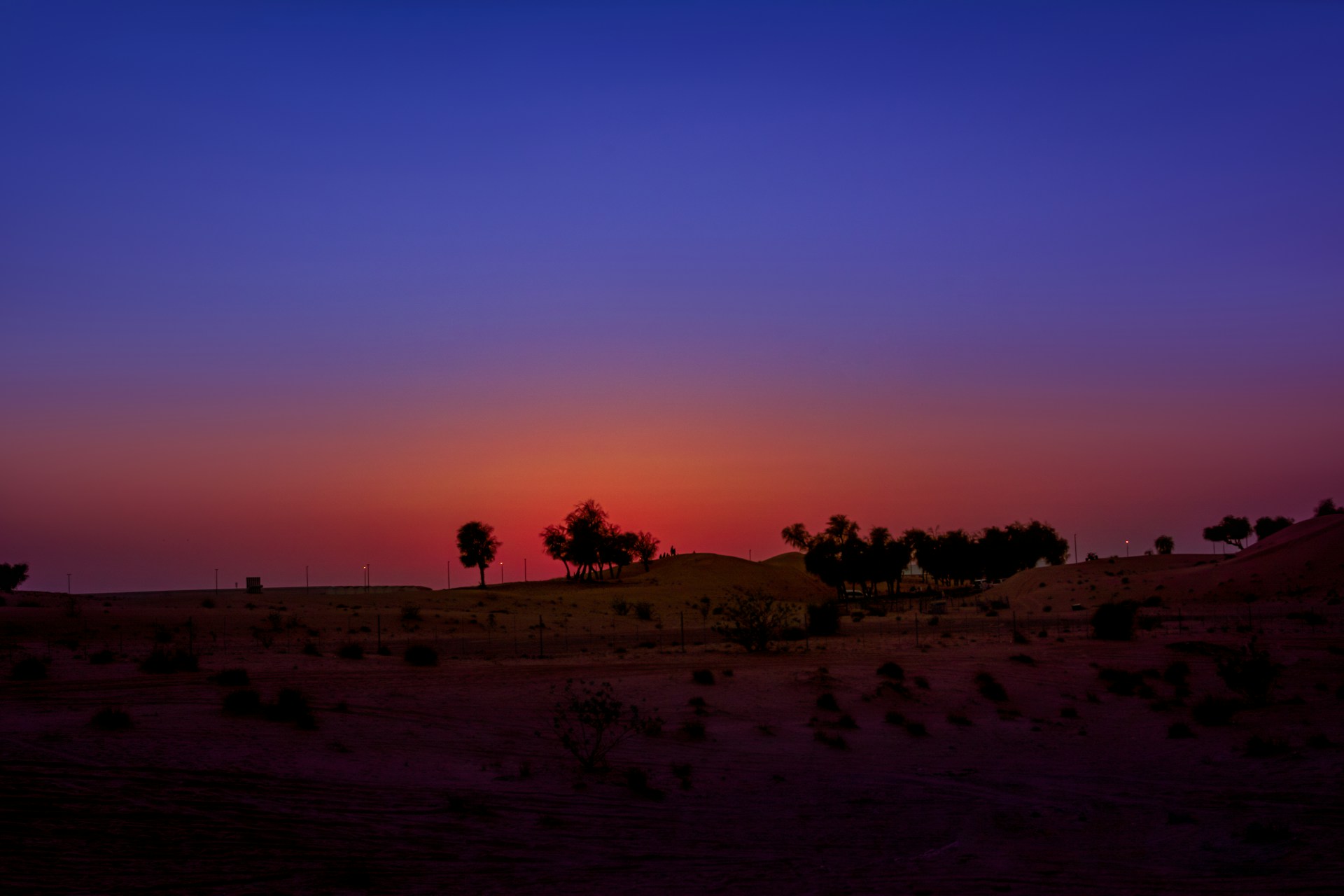
The overnight safari follows the same structure as an evening safari for the first several hours. The difference is what happens after 9:00 PM, when evening safari guests leave and overnight guests stay.
Up to this point, the experience is identical to what evening safari guests receive. The evening guests depart around 9:00–9:30 PM.
This is the part you are paying extra for, and the part that makes or breaks the experience.
After the evening guests leave, the camp empties out. The atmosphere shifts. The music stops, the performance lights go off, and you are left with a campfire, the group of overnight guests, and the desert sky.
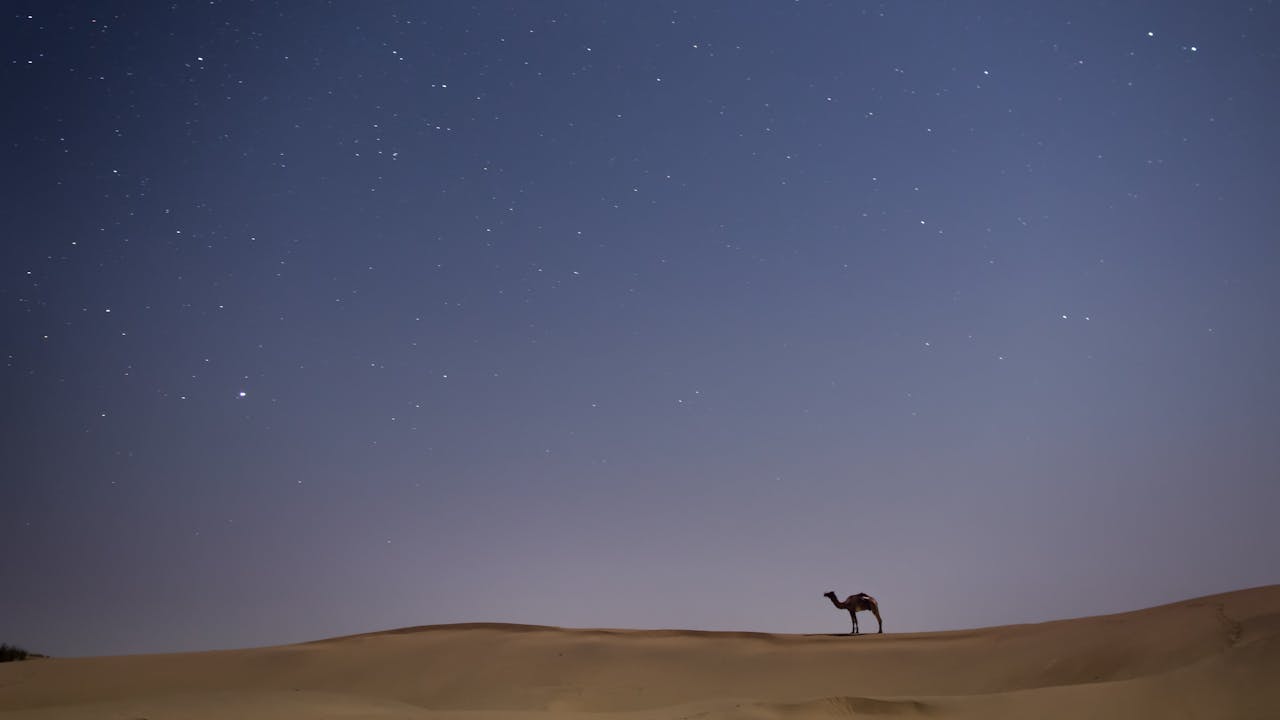
The stargazing is the single strongest argument for booking overnight. The Dubai desert has almost zero light pollution. On clear nights, the Milky Way is visible in detail that is impossible to see from the city. Some premium operators provide telescopes or a guided stargazing session. Even without equipment, the sky alone is worth staying for.
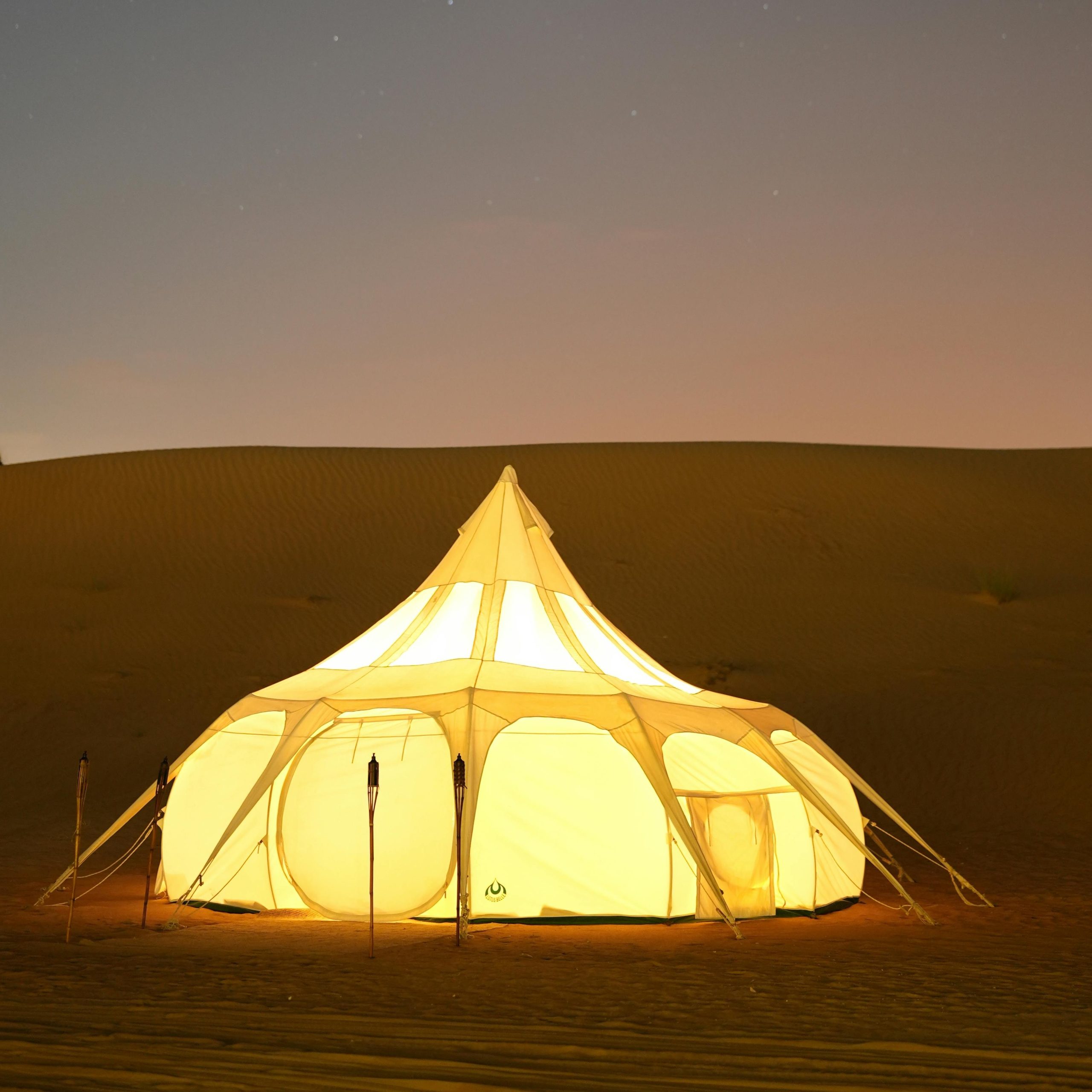
You sleep in the desert. The specifics depend heavily on how much you pay (covered in the pricing section below). At a minimum, you get a tent with a mattress and bedding. At the premium end, you get private rooms with proper beds and dedicated bathroom facilities.
The camp goes quiet. Some operators switch off all power at 11:00 PM for a true desert silence experience. Others keep basic lighting on near the bathroom area.
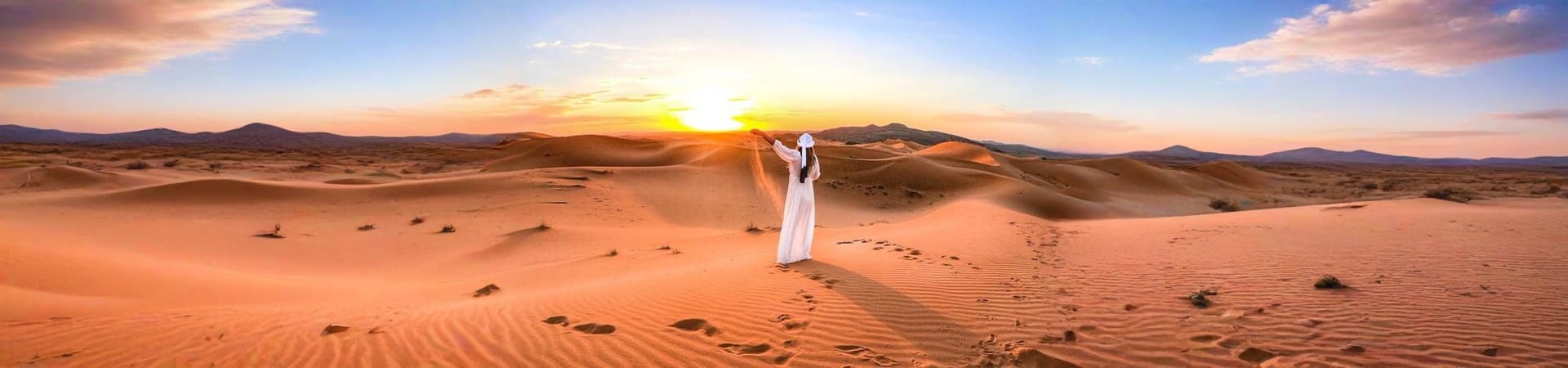
This is the second major reason to book overnight. Watching the sun rise over empty, untouched dunes is a completely different experience from the sunset. The light is softer and cooler. The sand turns from grey to gold. The desert is at its most quiet and photogenic.
Morning safari guests start arriving at the desert around 7:00 AM. For that 30–60 minute window before they arrive, the dunes belong to the overnight guests.
Breakfast varies by operator. Budget camps serve tea, coffee, toast, and fruit. Premium operators serve a full cooked breakfast — eggs, Arabic bread, cheese, cold cuts, pastries, and fresh juice.
After breakfast, you are driven back to your hotel, arriving between 8:30 and 10:00 AM depending on location.
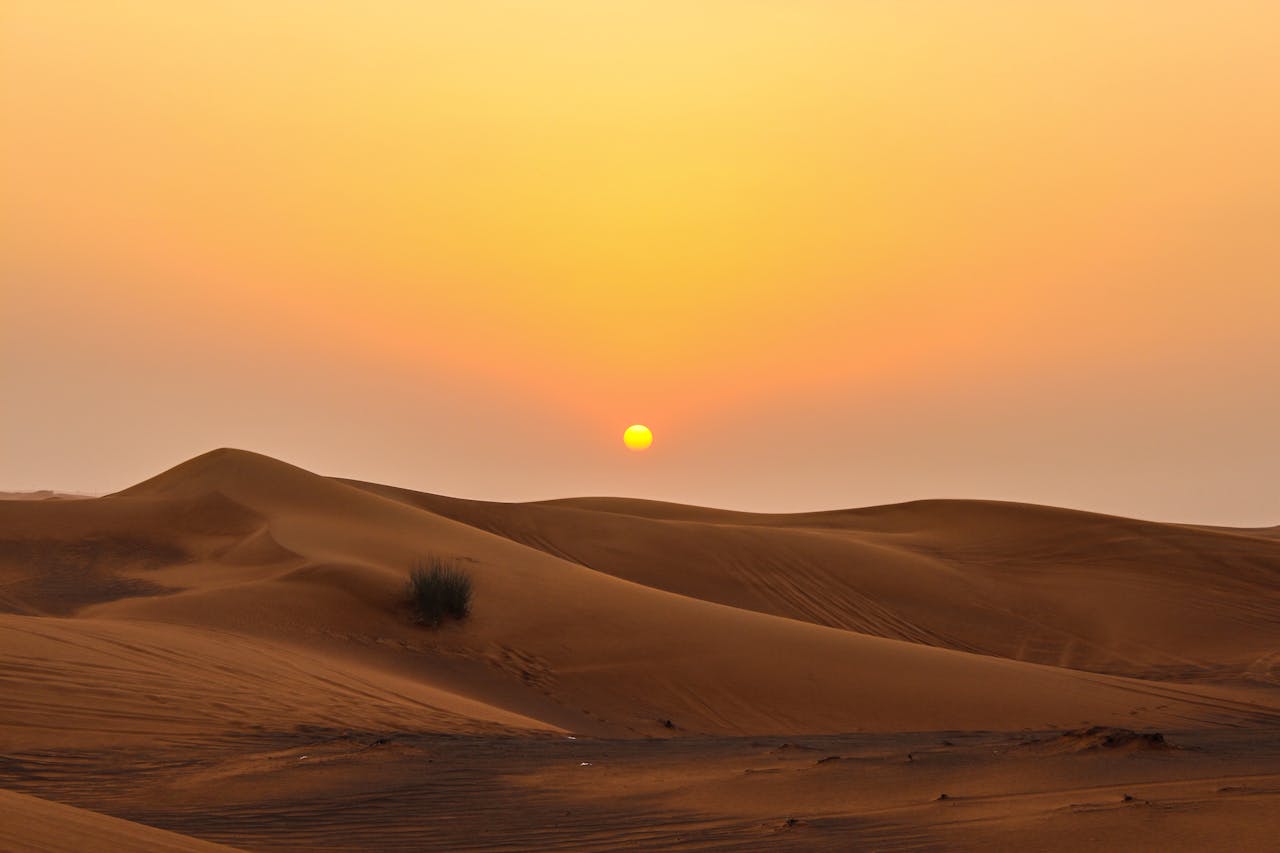
This is the real decision for most visitors. Here is exactly what you gain and what it costs you.
| Factor | Evening Safari | Overnight Safari |
|---|---|---|
| Duration | 6–7 hours | 16–18 hours |
| Pickup | 3:00–3:30 PM | 2:00–3:30 PM |
| Return | 9:00–10:00 PM | 8:30–10:00 AM (next day) |
| Dune bashing | Yes | Yes |
| Sunset | Yes | Yes |
| BBQ dinner | Yes | Yes |
| Live entertainment | Yes | Yes |
| Campfire after dark | No (you leave) | Yes |
| Stargazing | Limited (you leave by 9:30 PM) | Full night sky, darkest hours |
| Sunrise | No | Yes |
| Breakfast | No | Yes |
| Sleep in the desert | No | Yes |
| Price (budget) | AED 150–200 | AED 250–500 |
| Price (premium) | AED 200–500 | AED 700–1,200 |
| Best for | Most first-time visitors | Repeat visitors, couples, photography, bucket list |
The evening safari delivers 80% of the experience at 40–50% of the overnight price. The overnight earns its premium through three moments the evening cannot offer: the campfire after the crowds leave, the full night sky, and the desert sunrise. If those three moments matter to you, the overnight is worth every dirham. If they do not, the evening safari is the smarter booking.
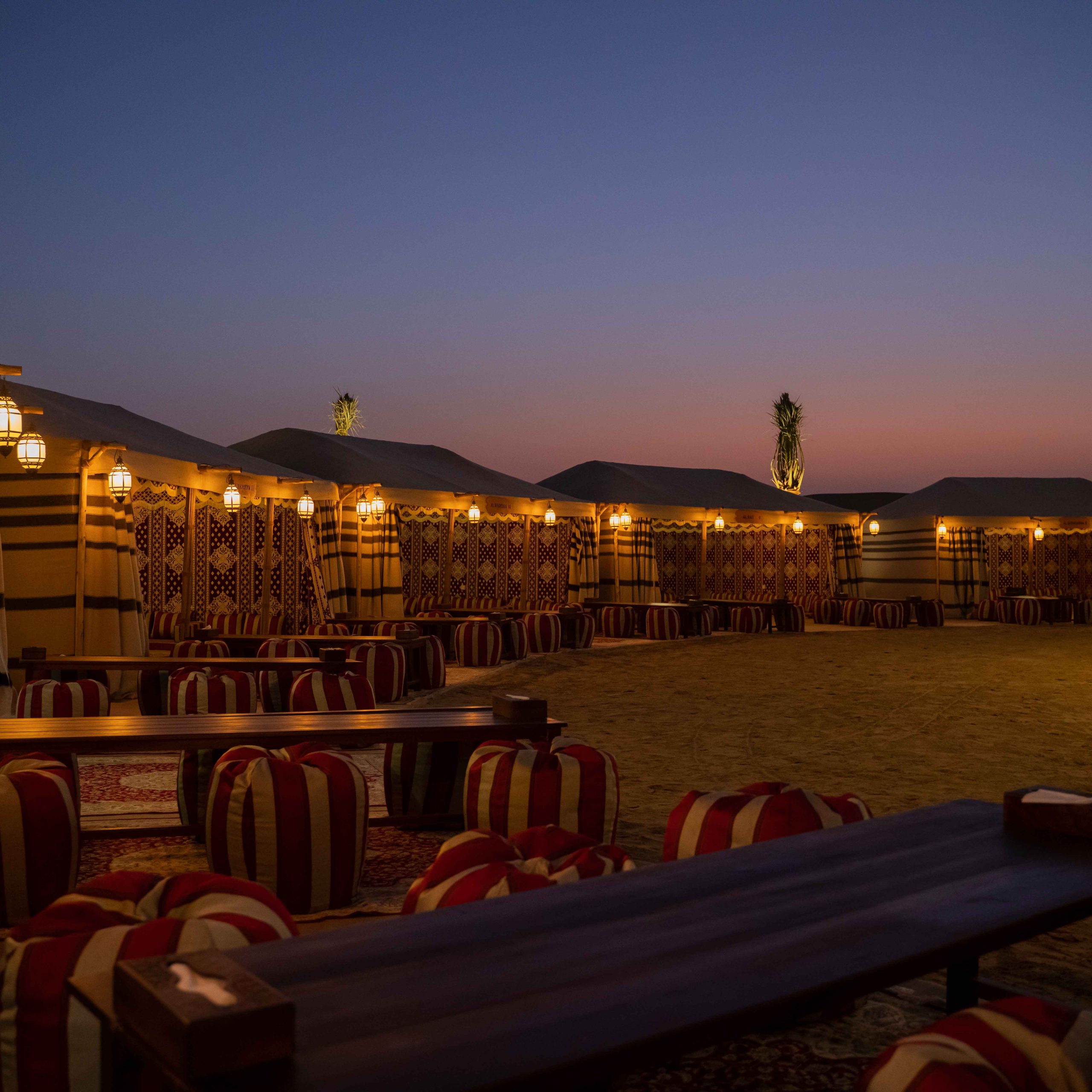
The overnight safari market in Dubai splits into two very different products at two very different price points. Knowing the difference prevents disappointment.
What you get:
What to expect realistically:
Who it suits: Budget travellers, backpackers, and younger visitors who care more about the experience than the comfort. If you can sleep in a hostel, you can sleep in a budget desert camp.
What you get:
What to expect realistically:
Who it suits: Couples, families who want comfort, photography enthusiasts, repeat Dubai visitors looking for something beyond the standard evening safari, and anyone for whom sleeping in basic conditions would ruin the experience.
At AED 300 for a budget overnight, you are paying roughly AED 100 more than a standard evening safari for the campfire, stargazing, sleep, sunrise, and breakfast. That is a strong value proposition.
At AED 7000+ for a premium overnight, you are paying for a fundamentally different product — smaller groups, better food, proper sleeping arrangements, and a conservation-focused experience. The value depends on your budget and how much comfort matters to you.
Sleeping outdoors in the Dubai desert is a very different proposition in January versus July.
| Season | Night Temperature | Sleep Comfort | Verdict |
|---|---|---|---|
| Dec – Feb | 12–18°C | Cool and comfortable with provided bedding. You may want an extra layer. | Best months for overnight |
| Mar – Apr | 18–24°C | Pleasant. Light bedding is enough. | Good — warm but comfortable |
| May – Jun | 26–32°C | Warm. Falling asleep takes longer. Tents without AC can feel stuffy. | Marginal — depends on heat tolerance |
| Jul – Sep | 30–36°C | Hot. Even after midnight, temperatures stay above 30°C. Sleep quality is poor without AC. | Not recommended unless camp has AC tents |
| Oct – Nov | 22–28°C | Warm but manageable. The heat breaks in late October. | Good — improving as winter approaches |
Book between November and March. The night temperatures make the difference between sleeping comfortably and lying awake in a warm tent wondering why you did not book an evening safari instead.
If you must book in summer, choose a premium operator that offers air-conditioned tents. Budget camps in July are genuinely uncomfortable overnight.
This is the section most guides skip, and it is the part that determines whether you enjoy the overnight or regret it.
Budget camps use basic canvas or nylon tents. They block wind and provide privacy but do not insulate well against heat or cold. Premium camps use larger, more structured tents or permanent desert rooms with thicker walls and better ventilation.
Budget: A foam mattress (5–8 cm thick) on the ground with a pillow and blanket. Adequate, not luxurious. Similar to a basic camping setup.
Premium: A raised bed or thicker mattress with proper sheets, multiple pillows, and heavier bedding. Some operators provide sleeping bags rated for desert temperatures.
Budget: Portable chemical toilets shared among all guests. No showers. Bring wet wipes and hand sanitiser.
Premium: Permanent or semi-permanent bathroom blocks with flush toilets and basic wash facilities. Some offer showers. Still shared, but maintained and cleaned.
The desert itself is silent. Your fellow guests may not be. Budget camps with 40+ guests will have noise until everyone settles. Premium camps with smaller groups are quieter. Bring earplugs if you are a light sleeper — this is the single most useful item no packing list mentions.
Most camps have no power outlets in sleeping areas. Some premium camps provide limited charging near the common area. Bring a portable power bank if you need your phone for a sunrise alarm or morning photos.
This experience is not for everyone, and that is fine. Here is an honest assessment.
A reasonable concern. You are committing to a full night in the desert with no easy way to leave.
If you are unsure, book a premium overnight. The better sleeping conditions and smaller group size reduce the risk of an uncomfortable night. Budget overnight is best for visitors who already know they are comfortable with basic camping.
For the right visitor, yes. The overnight adds three experiences the evening safari cannot offer: a campfire after the crowds leave, full-darkness stargazing with the Milky Way visible, and a desert sunrise shared with a small group. If those moments appeal to you, the extra cost is justified. If you mainly want dune bashing and dinner, the evening safari delivers that at a lower price.
Budget camps provide tents with foam mattresses, pillows, and blankets. Premium operators offer private rooms or larger tents with proper beds and bedding. Sleeping arrangements vary significantly by price point — the difference between AED 300 and AED 700+ is primarily the sleeping comfort and group size.
July through September, night temperatures stay above 30°C. Without air-conditioned tents, sleep quality is poor. November through March is the recommended window, with night temperatures between 12–22°C — cool enough to sleep comfortably under provided bedding. If you must book in summer, choose a premium operator with AC tents.
Yes. Budget camps typically have portable chemical toilets. Premium camps have permanent bathroom blocks with flush toilets and basic wash facilities, sometimes including showers. Bring your own toiletries, wet wipes, and hand sanitiser regardless of the tier.
Children aged 6+ generally do well on overnight safaris, especially during winter months when sleeping conditions are comfortable. Children under 6 often struggle — the late campfire, unfamiliar sleeping environment, and early sunrise disrupt their sleep. For younger families, the evening safari (returning by 9:30 PM) is usually the better choice.
The evening safari ends at 9:00–9:30 PM. The overnight continues with a campfire, stargazing, sleeping in the desert, sunrise viewing, and breakfast — returning to your hotel by 8:30–10:00 AM the next day. The adventure activities (dune bashing, sandboarding, camel riding) and dinner are the same on both.
If you want the honest answer condensed into one paragraph: the overnight desert safari is worth it if you book between November and March, set your expectations for camping (not a hotel), and value the quiet, the stars, and the sunrise more than an extra morning of sleep. It is not worth it if you are visiting in peak summer, expect hotel-standard comfort at a budget price, or would rather use that evening and morning for other Dubai activities.
The desert at 2:00 AM, with no sound and no light except the stars, is something Dubai cannot offer you anywhere else. That is what you are paying for. Whether that is worth it is a question only you can answer — but now you know exactly what to expect.
Book your overnight desert safari and experience the Dubai desert at its most magical.