

A Practical Guide for Desert Safari Visitors
Dubai Tips & Guides
> What to Wear on a Dubai Desert Safari
The Dubai desert hits 45°C in summer and drops to 15°C on winter evenings. What you wear on your safari affects everything — your comfort during dune bashing, your ability to enjoy the evening camp, and how well you handle the sand.
This guide covers exactly what to pack for each part of the experience, from afternoon pickup to the drive home after dinner.
See our Complete Desert Safari Guide →
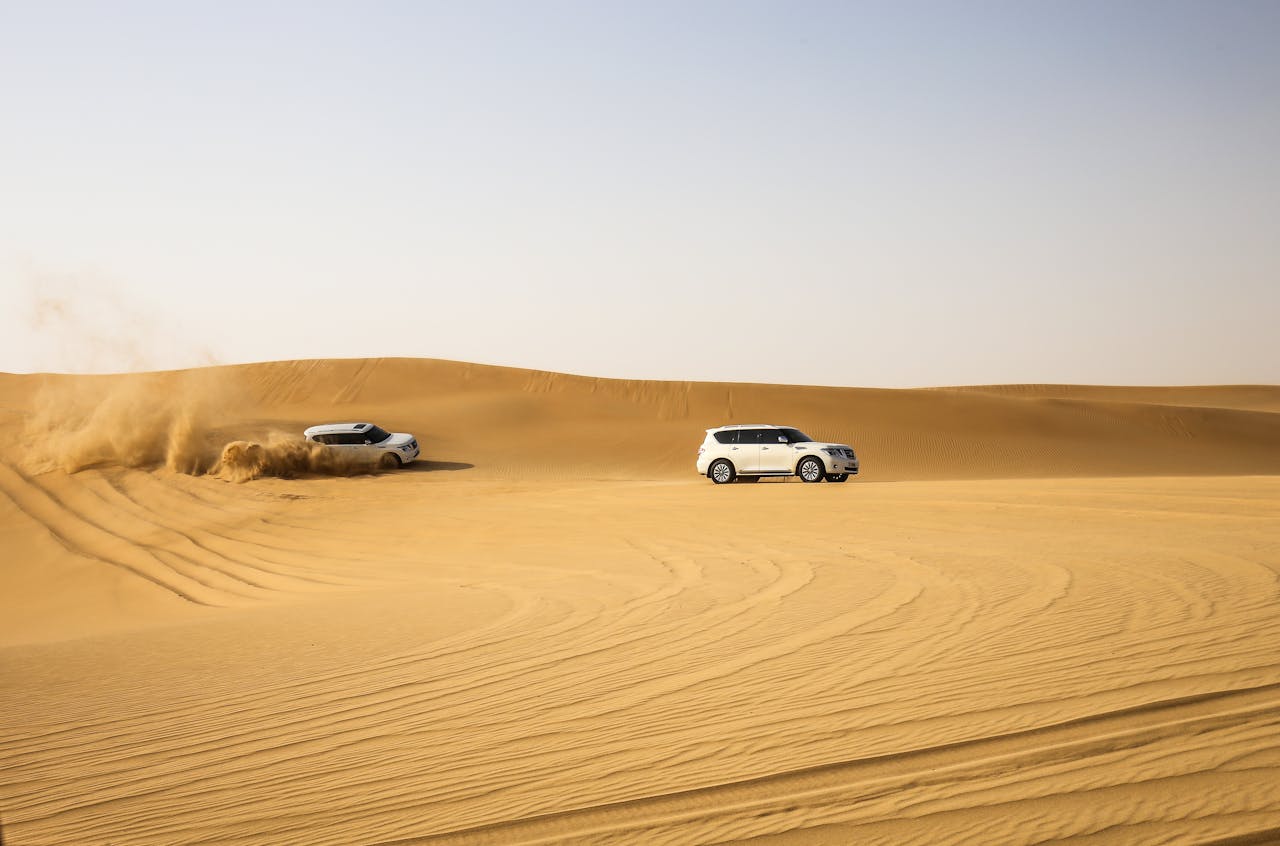
A desert safari is not a walk through the Dubai Mall. You will sit in a 4x4 bouncing over sand dunes. You will walk barefoot through soft desert sand. You will eat outdoors under open sky. And if you book a morning safari, you will face direct sun at its strongest.
The wrong clothing choice turns a memorable experience into a miserable one. Tight jeans trap heat. Dark colours absorb sunlight. Flimsy sandals fill with sand in seconds. Each of these problems is avoidable with a few smart choices before you leave your hotel.
Fabric choice is the single biggest factor in staying comfortable.
A loose-fitting, light-coloured top with sleeves is the ideal choice. Short sleeves are fine. Long sleeves offer better sun protection without adding much warmth if the fabric is thin enough.
For women, a cotton tunic or relaxed-fit blouse works well. For men, a breathable polo shirt or lightweight button-down does the job. Avoid anything you'd be upset to get sandy — you will get sandy.
White, beige, light grey, and pastels reflect sunlight. Black and navy absorb it. On a 40°C afternoon, that difference is significant.
Loose trousers, cotton pants, or long shorts that fall past the knee are your best options. Cargo pants and linen trousers both work well.
This is where most first-time visitors get it wrong.
Best option: Closed-toe sneakers or sport sandals with an ankle strap (like Tevas or Chacos). You can slip them off easily at the camp and they won't disappear into the sand.
Acceptable: Clean trainers or hiking sandals.
Skip these: Flip-flops (they fly off during dune bashing), heels (sand is not a solid surface), and brand-new white shoes (they will not stay white).
You will be barefoot for parts of the experience — walking to camel rides, entering the camp seating area. In winter, the sand is cool and pleasant. In summer, bring footwear you can get on and off quickly because afternoon sand can burn.
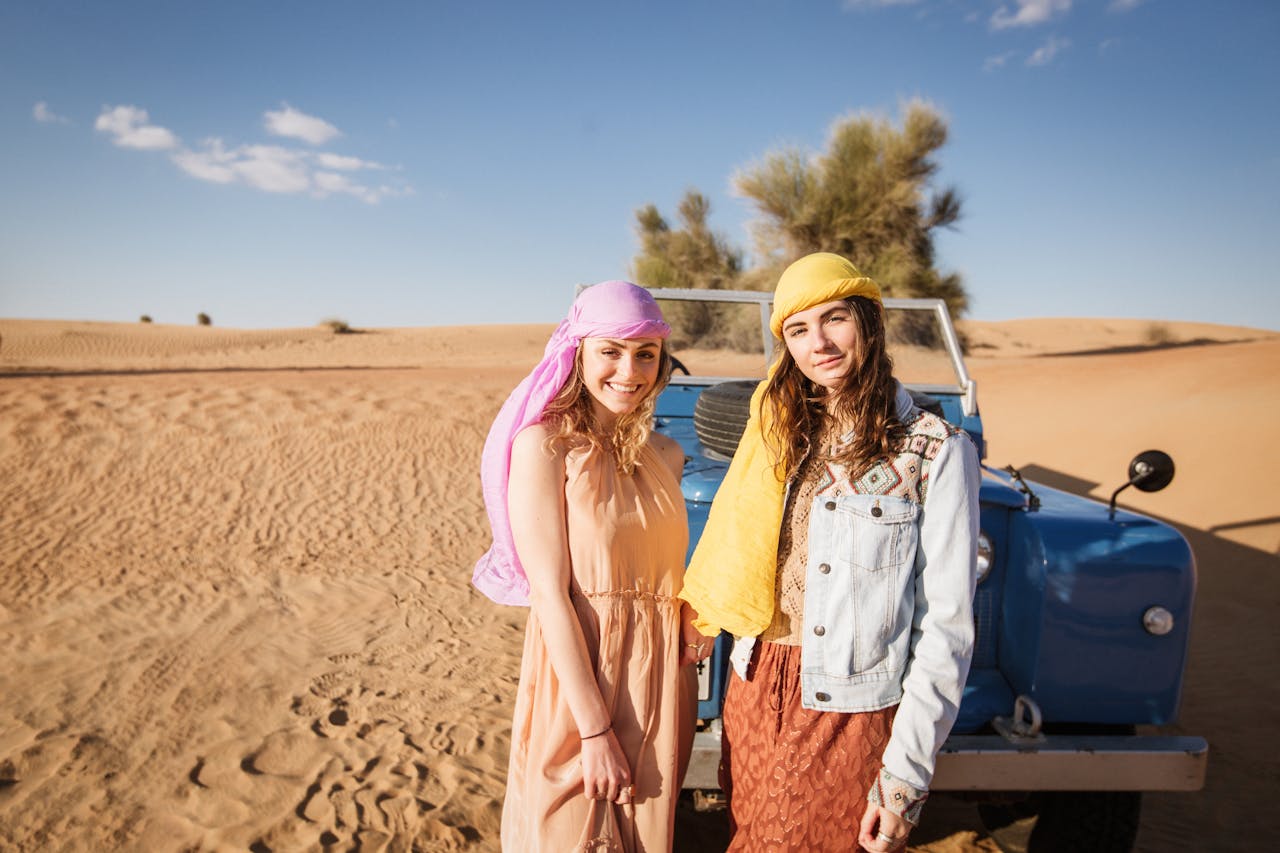
A desert safari is not one activity — it is five or six packed into a single trip. Each one has different clothing demands.
You will be strapped into a 4x4 while a driver sends it over steep sand dunes at speed. You will bounce, tilt, and grip. Clothing needs to stay in place.
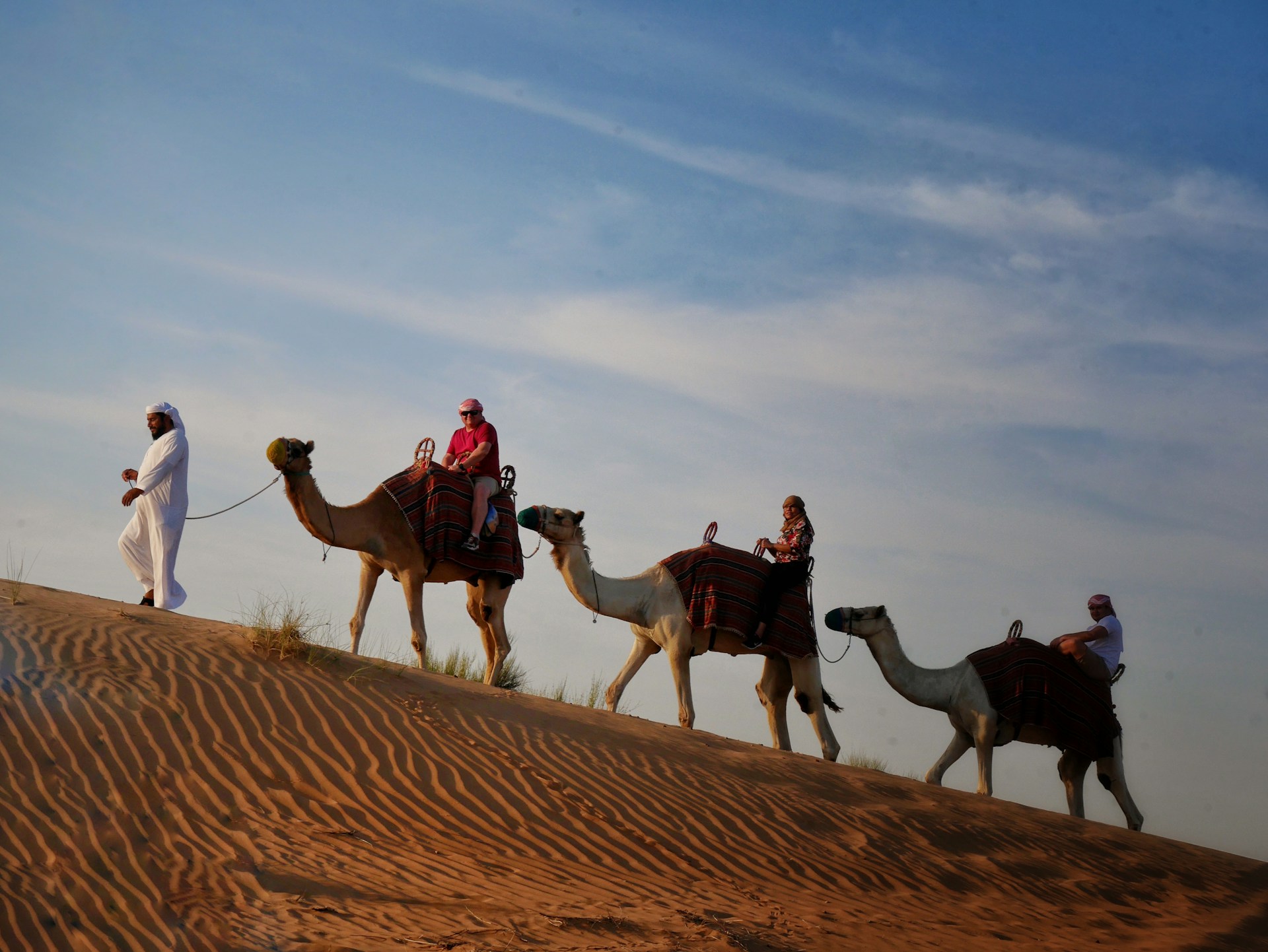
You will sit with legs straddling the camel's hump, and the motion involves a forward-and-back rocking. Skin rubs against the saddle.
Similar to snowboarding but on hot sand dunes. You will hike up dunes and slide down on a board, often falling and rolling.
If your package includes quad biking, operators typically require closed-toe shoes. This is non-negotiable at most camps.
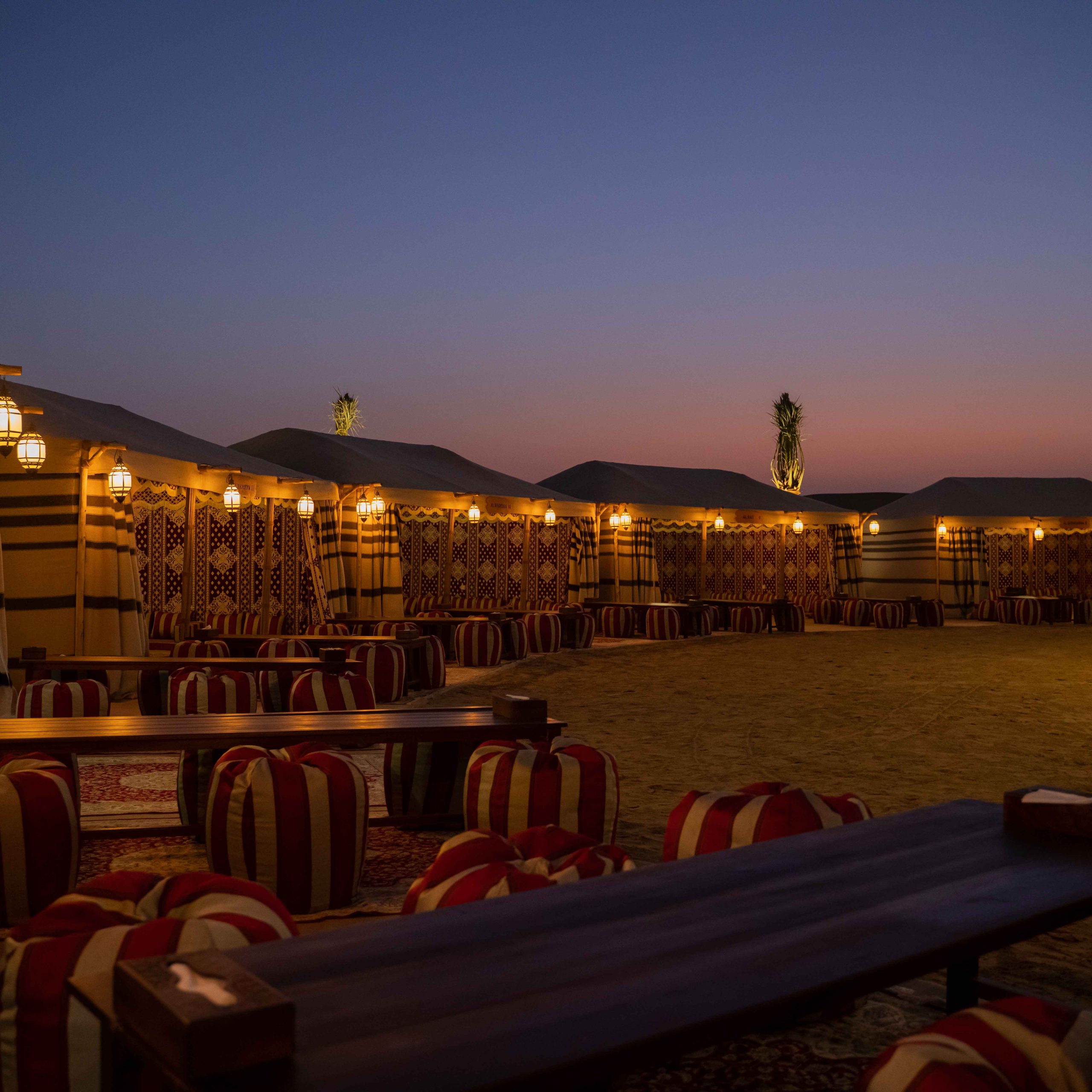
The evening camp is the most relaxed portion. You will sit on cushions on the ground, eat buffet-style food, and watch belly dancing or tanoura performances.
The time of day changes what you need.
Sun exposure is the primary concern. You are in direct desert sunlight with no shade during the dune bashing portion.
Priorities:
These start in heat and end in cooler conditions. The temperature swing between afternoon arrival and post-dinner departure can be 15°C or more, especially between November and March.
Priorities:
Dubai's desert temperature varies dramatically across the year. Here is a quick reference so you can pack based on your travel dates.
| Month | Daytime Temp | Evening Temp | What to Wear |
|---|---|---|---|
| Jan – Feb | 20–25°C | 12–16°C | Light layers during the day. Bring a warm jacket or fleece for the evening — it gets genuinely cold after sunset. |
| Mar – Apr | 26–33°C | 17–22°C | Comfortable warm-weather clothing. A light cardigan or hoodie is enough for the evening. |
| May – Jun | 35–42°C | 25–30°C | Maximum sun protection. Lightweight, loose, light-coloured clothing. Stay hydrated. Evenings are warm but bearable. |
| Jul – Aug | 40–48°C | 30–34°C | Peak heat. Wear the lightest fabrics you own. Morning safaris are brutal — evening safaris are the better choice. Expect to sweat through your clothes. |
| Sep – Oct | 35–40°C | 25–30°C | Still hot, but cooling down. Similar to May–Jun guidance. |
| Nov – Dec | 24–30°C | 15–20°C | The most comfortable months. Light clothing during the day with a jacket for the evening. Peak tourist season for a reason. |
If you are visiting between November and February, the evening layer is not optional. Desert temperatures drop faster than most visitors expect, and sitting outdoors after 7 PM without a jacket is uncomfortable.
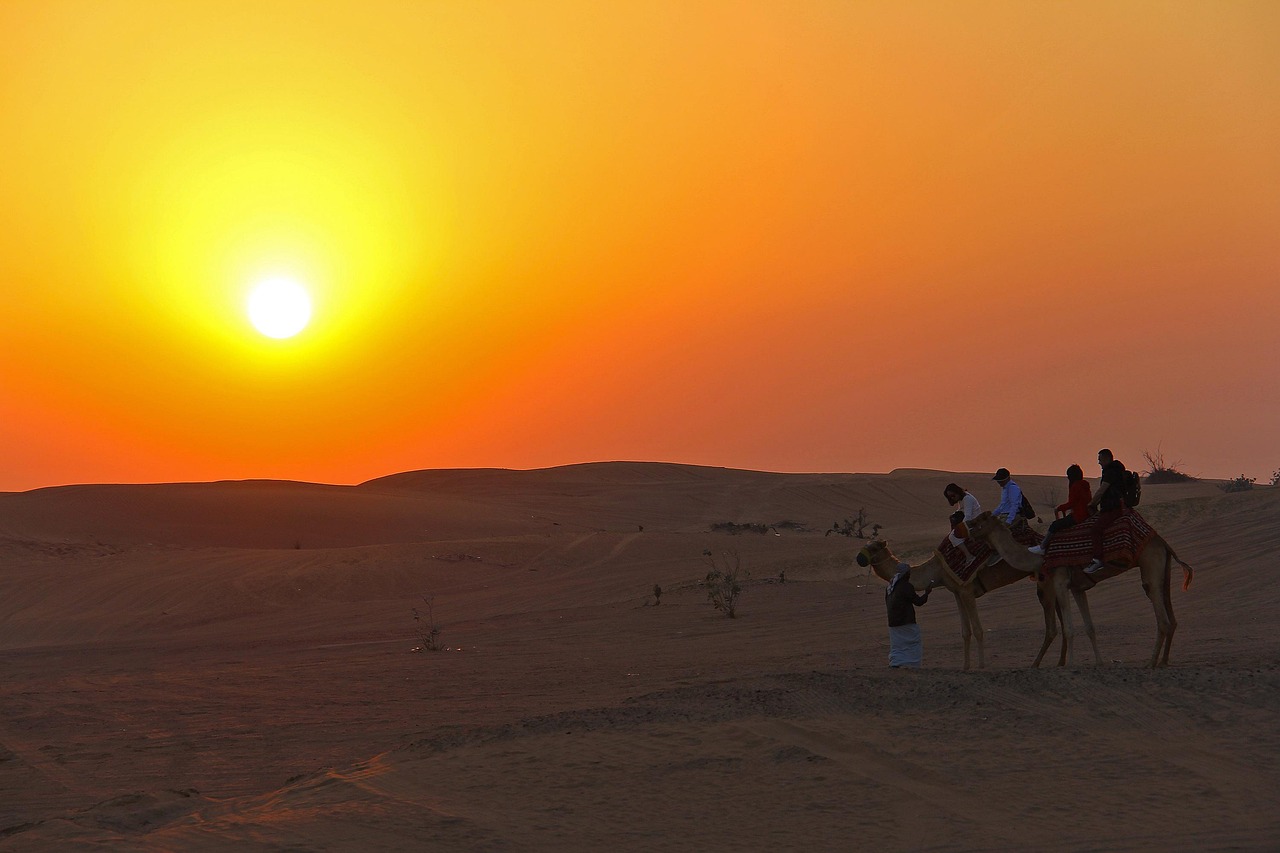
Dubai is cosmopolitan, and desert safari camps are tourist-oriented environments. There is no strict dress code at most safari camps.
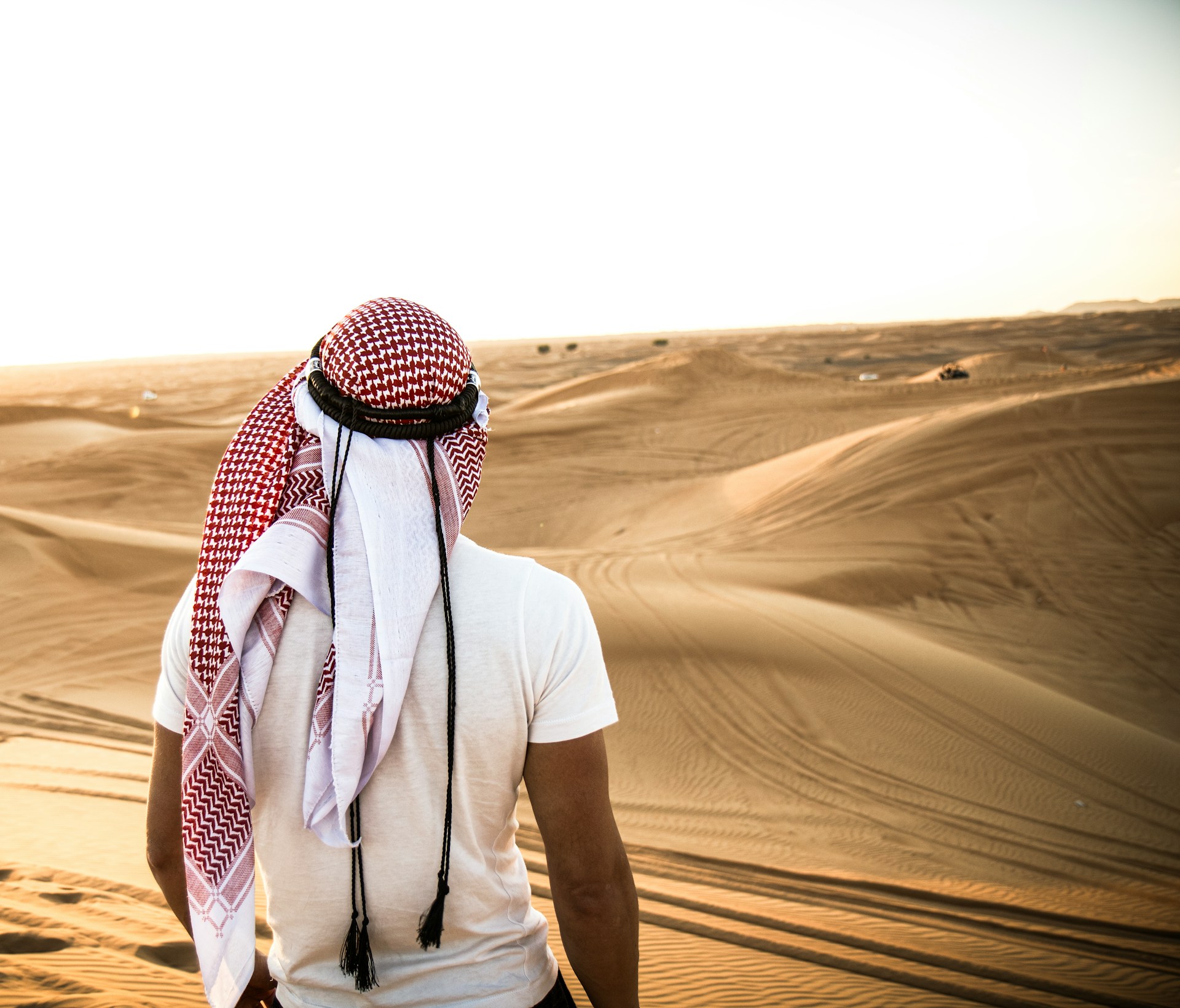
That said, the UAE is a Muslim country, and dressing with some awareness of local customs is respectful and appreciated. Practical guidance:
Most visitors find that dressing for heat naturally results in an outfit that fits local expectations. Loose, light, covered clothing is both the most comfortable and the most appropriate choice.
Beyond clothing, a few accessories make a real difference:
If you want a simple answer, here it is:
Light cotton tunic or loose t-shirt + linen pants or knee-length shorts + sport sandals or sneakers + sunglasses + light scarf + a cardigan for evening
Breathable polo or cotton t-shirt + cargo pants or chino shorts + sneakers or sport sandals + sunglasses + a cap + a light hoodie or jacket for evening
This combination handles dune bashing, sandboarding, camel riding, dinner at the camp, and the drive home. It packs light, washes easily, and keeps you comfortable across a 10-15 degree temperature range.
Most reputable operators supply certain items, but this varies by company and package. Common inclusions:
Items you are always responsible for: sunscreen, sunglasses, appropriate footwear, and layers for temperature changes. Check with your operator before departure if you have specific questions about what's included.
Yes. Knee-length shorts are practical and widely worn by safari visitors. Shorter styles are less ideal — they leave your thighs exposed to hot sand, vehicle seats, and saddle friction during camel rides. For quad biking, long trousers are required by most operators.
There is no formal dress code at most tourist-oriented safari camps. That said, the UAE is a Muslim country, and dressing modestly is appreciated. Covering your shoulders and knees is a respectful default. In practice, clothing that keeps you comfortable in the heat — loose, light, covered — naturally aligns with local expectations.
It depends on your activities. Closed-toe shoes are mandatory for quad biking and recommended for sandboarding. For dune bashing, camel riding, and the camp dinner, sport sandals with ankle straps work well. Avoid flip-flops — they come off too easily during dune bashing and sink into soft sand.
Daytime temperatures are pleasant (20–30°C), but evenings drop to 12–16°C. Wear light layers during the day and bring a proper jacket or fleece for after sunset. A scarf also helps. Most first-time winter visitors underestimate how cold the desert gets at night.
Dresses and skirts are impractical for the active portions — dune bashing, sandboarding, and camel riding all involve movement that makes fitted trousers or shorts a better choice. A dress or skirt is fine for the evening camp dinner if you change after the activities, but you will be sitting on the ground on cushions, so plan for that.
Desert safari clothing comes down to three principles: light fabrics, loose fits, and layers for temperature shifts. Choose clothes you don't mind getting sandy, bring one warm layer for the evening, and wear shoes you can take on and off easily.
Get the clothing right, and you can focus on what actually matters — the dunes, the sunset, and the experience itself.
Now that you know what to wear, it's time to book your perfect desert safari experience.