Desert Safari Safety Tips Dubai: What Every Visitor Should Know
Dubai desert safaris are professionally regulated, with inspected vehicles, trained drivers, and government-approved camps serving hundreds of thousands of visitors each year.
Dubai Tips & Guides
> Desert Safari Safety Tips Dubai
But the desert itself does not care about regulations. It is hot, remote, and physically demanding. The risks are not from the safari — they are from the environment. Dehydration, heat exhaustion, sunburn, and motion sickness are the real concerns, and each one is preventable with basic preparation.
This guide covers the safety information that matters: what to check before you book, how to stay safe during each activity, who should skip what, and what to do if something goes wrong.
Dubai's tourism industry is heavily regulated. Desert safari operators must hold a valid license from the Department of Tourism and Commerce Marketing (DTCM) to operate legally. This licensing requires:
DTCM Safety Requirements:
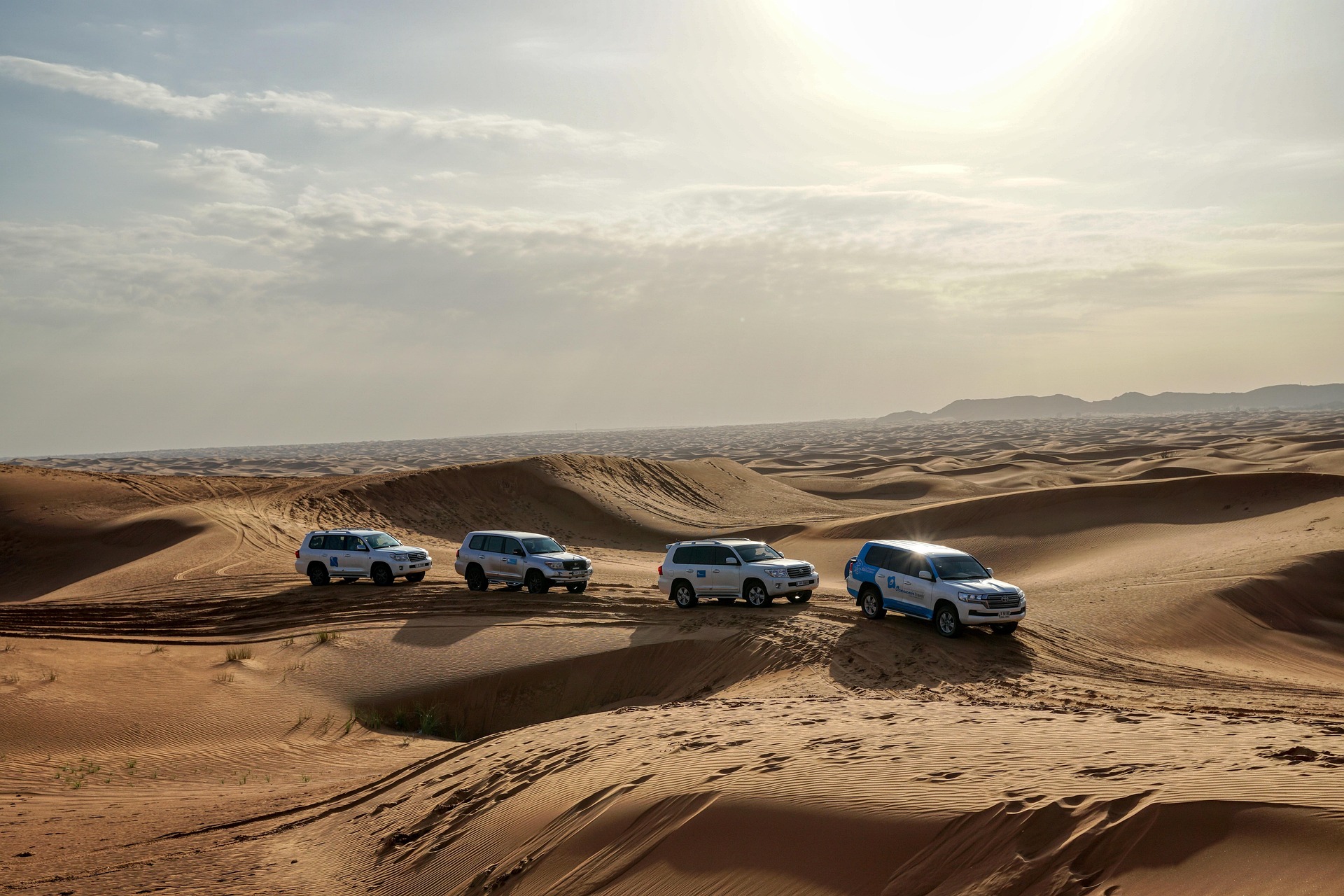
Vehicle safety standards — Safari vehicles must pass regular inspections. Licensed operators use modern 4x4s equipped with roll cages, functioning seatbelts, and GPS tracking.
Trained drivers — Dune bashing drivers hold desert driving certifications. They are not random employees behind the wheel — they train specifically for sand driving conditions.
Insurance coverage — Licensed operators carry passenger liability insurance. This is required as part of DTCM licensing.
First aid equipment — Vehicles carry first aid kits, and most operators have staff trained in basic emergency response.
The Short Answer
Desert safaris with licensed operators are safe. The longer answer: you still need to prepare for the desert environment, know your own physical limits, and follow basic precautions.
How to Verify Your Operator Before Booking
"Choose a reputable operator" is advice that appears in every safari guide. Here is how to actually verify one.
✅ Before You Book, Check for These:
DTCM license number — A legitimate operator will display their license number on their website or provide it upon request. If they cannot produce one, do not book.
Recent reviews on multiple platforms — Check Google, TripAdvisor, and Viator. Look specifically for safety-related comments, not just "had a great time." Red flags include mentions of reckless driving, broken seatbelts, or vehicles in poor condition.
Clear cancellation and insurance policy — Legitimate operators publish their cancellation terms. Ask directly about passenger insurance if it is not stated on their website.
A pre-trip safety briefing — Reputable operators provide a verbal or written safety briefing before the drive begins. If your driver heads straight into the dunes without any briefing, that is a concern.
Vehicle condition — Look at the vehicle when it picks you up. Functional seatbelts, clean interior, working air conditioning, and a driver who checks that all passengers are secured before departing are baseline indicators.
Transparent pricing — Operators who quote suspiciously low prices (under AED 50 per person for an evening safari) are often unlicensed or cutting corners on vehicle maintenance and safety equipment.
Safety by Activity
Each safari activity has different risks and different rules. Generic advice like "be careful" is not useful. Here is what to know for each one.
🚙 Dune Bashing
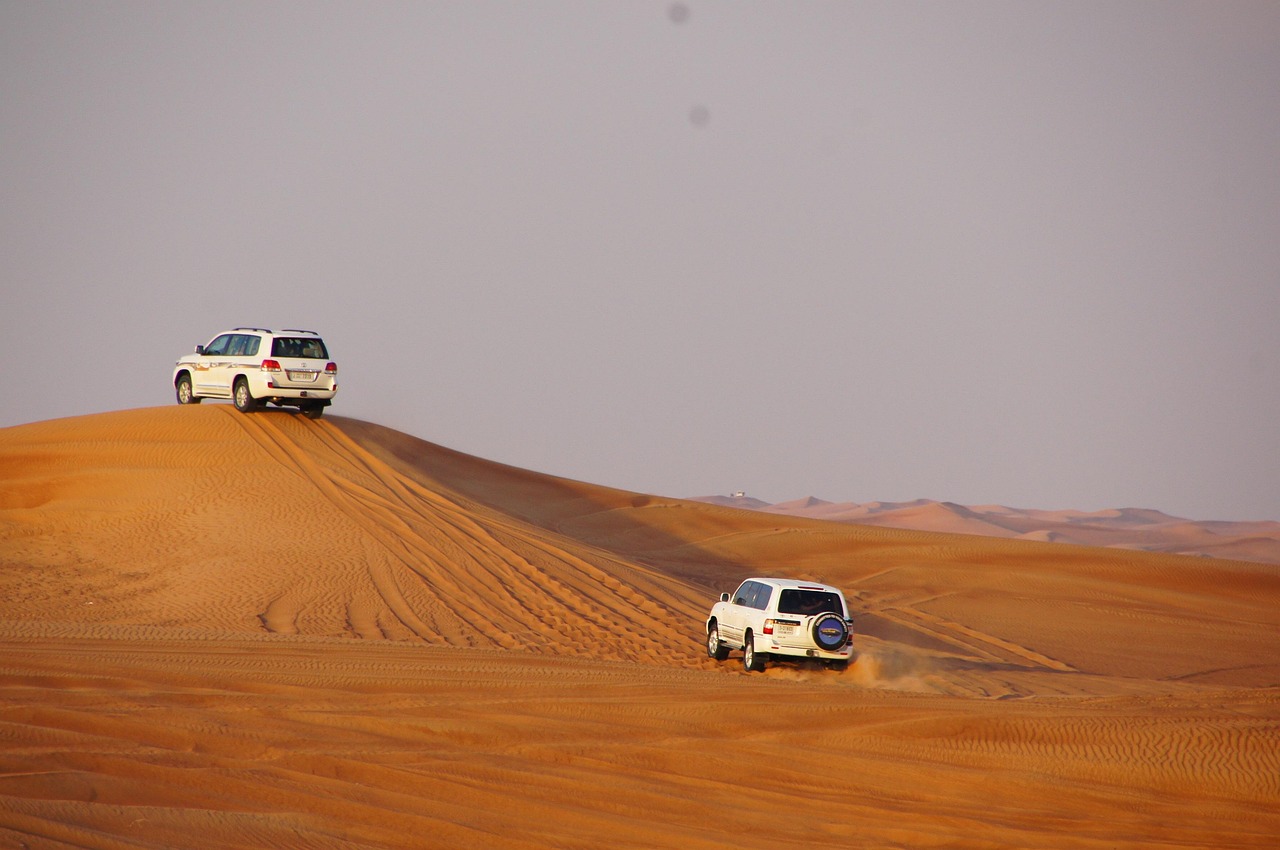
This is the highest-adrenaline activity on the safari and the one most likely to cause discomfort. A driver takes a 4x4 over steep sand dunes at speed, with sharp turns, sudden drops, and steep climbs.
⚠️ Safety Rules:
Wear your seatbelt the entire time. Do not remove it for photos, to lean out the window, or for any other reason.
Hold the grab handle above your door or the seat in front of you. Sudden changes in direction can throw you sideways.
Keep arms, hands, and head inside the vehicle at all times. Open windows are fine for ventilation, but do not lean out.
Inform the driver before the ride begins if you want a gentler experience. Drivers can and do adjust their driving intensity when asked.
Secure all loose items — phones, cameras, water bottles. Anything not held or zipped into a bag will fly around the cabin.
The biggest actual risk: Motion sickness, not crashes. See the dedicated section below.
🏍️ Quad Biking
You control the vehicle yourself, which means rider error is the primary risk factor.
⚠️ Safety Rules:
Helmets are mandatory. If an operator does not provide one, do not ride.
Closed-toe shoes with socks are required — no sandals, no exceptions.
Follow the guide's path. Do not ride off-trail, attempt stunts, or race other riders.
Keep a safe distance from the quad in front of you. Sand spray reduces visibility significantly.
Do not ride if you have consumed alcohol. Reaction time matters on shifting sand.
If you have never ridden a quad before, say so. Operators adjust instruction time for beginners.
🏄 Sandboarding
Lower risk than other activities, but injuries happen when people land badly.
⚠️ Safety Rules:
Slide on your stomach or seated for your first few runs. Standing requires board sport experience.
Sand burns are real — long sleeves and trousers protect against friction burns when you fall.
Do not attempt dunes that are steeper than what the guide recommends. Steep dunes look fun from the top and feel dangerous on the way down.
Walk up the dune on the smooth slope, not the ridgeline. The ridge edge is unstable and can collapse under your weight.
🐪 Camel Riding
Camels are large, tall animals. The mounting and dismounting process is the moment most injuries occur.
⚠️ Safety Rules:
Listen to the handler's instructions carefully. Camels stand up rear-first, which tips you forward. Lean back and hold the saddle handle.
Keep both hands on the saddle during the stand-up and sit-down process. This is not the moment for a selfie.
Sit centred in the saddle. Leaning too far to one side can shift the saddle and unbalance you.
Do not shout at, hit, or startle the camel. They are working animals managed by handlers — let the handler control the animal.
Children should only ride with an adult or on camels specifically managed for child riders.
🏕️ Evening Camp
The camp is the lowest-risk portion of the safari, but a few considerations apply.
Camp Safety Notes:
Fire shows — Maintain the distance that performers establish. Fire performers use real flame, and seated audiences should not lean forward into the performance space.
Hot sand — If you remove your shoes at camp, be aware that sand retains heat well into the evening during summer months. In winter this is not a concern.
Food allergies — The BBQ buffet includes multiple dishes. If you have allergies to nuts, dairy, gluten, or specific meats, inform your operator at booking and again at the camp. Most camps accommodate dietary requirements when given notice.
Who Should Skip Which Activities
Not every activity is suitable for every visitor. This table summarises the medical and age-related restrictions that apply.
Condition
Dune Bashing
Quad Biking
Sandboarding
Camel Riding
Camp & Dinner
Pregnant (any trimester)
Skip
Skip
Skip
Skip
Safe
Heart condition
Consult doctor
Skip
Mild dunes only
Safe
Safe
Back or spine problems
Skip
Skip
Skip
Consult doctor
Safe
Recent surgery (< 6 weeks)
Skip
Skip
Skip
Consult doctor
Safe
Children under 3
Skip
Skip
Skip
Skip
Safe
Children 3–5
Gentle ride only
Skip
Skip
With adult only
Safe
Children 6–12
Safe
With supervision
Safe
Safe
Safe
Severe motion sickness
Consider skipping
Safe
Safe
Safe
Safe
Mobility limitations
Vehicle access only
Skip
Skip
Consult operator
Safe (seating may need arrangement)
💡 Important Note
If you are unsure about a specific condition, contact your operator before booking. Reputable operators will give you a straight answer about what is and is not suitable for your situation.
The desert heat is the single biggest safety factor outside of the activities themselves. Understanding the warning signs of heat-related illness can prevent a medical emergency.
💧 Dehydration
⚠️ Signs:
Thirst, dark yellow urine, dry mouth, headache, fatigue, dizziness.
Prevention:
Drink water consistently throughout the safari — small sips every 15–20 minutes, not large amounts at once.
Do not wait until you feel thirsty. By the time you feel thirst, you are already mildly dehydrated.
What to do: Move to shade, drink water slowly, rest. Dehydration resolves quickly if caught early.
🌡️ Heat Exhaustion
⚠️ Signs:
Heavy sweating, cold or clammy skin, nausea, weakness, fast or weak pulse, muscle cramps.
Prevention:
Stay hydrated, wear light clothing, take shade breaks during morning safaris.
Avoid alcohol before or during the safari — it accelerates fluid loss.
What to do: Move to shade or air conditioning immediately. Apply cool water to the skin. Drink water. Rest with legs elevated. Inform your guide.
🚨 Heatstroke (Medical Emergency)
🚨 MEDICAL EMERGENCY
Signs: Body temperature above 40°C, hot and dry skin (sweating may stop), confusion, slurred speech, rapid pulse, loss of consciousness.
What to do: This is a medical emergency. Call 998 (ambulance) immediately. Move the person to shade. Apply cool water or ice to the neck, armpits, and groin. Do not give fluids if the person is confused or unconscious. Alert your guide and operator.
Key rule: If someone stops sweating in the desert heat and becomes confused, treat it as an emergency. Do not wait.
Motion Sickness: Prevention and Management
Dune bashing is the most common cause of motion sickness on a desert safari. The combination of rapid turns, elevation changes, and a warm vehicle triggers nausea in a significant number of passengers — including people who do not normally get car sick.
🕐 Before the Safari
Pre-Safari Preparation:
Eat a light meal 1–2 hours before departure. An empty stomach makes nausea worse. A heavy or greasy meal also makes it worse. Toast, crackers, or a light sandwich is ideal.
Avoid reading or screens during the drive to the desert. Focus on the horizon once dune bashing begins.
🚙 During Dune Bashing
💡 Tips That Help:
Sit in the front seat if possible. Front-seat passengers experience less motion disorientation than rear-seat passengers.
Look at the horizon, not at the sand directly outside your window. Fixing your gaze on a distant, stable point reduces the conflicting signals that cause nausea.
Open your window slightly for fresh air. The airflow helps.
Tell the driver if you feel unwell. Drivers can stop and give you a break. This is common and no one will judge you for it.
🎒 What Operators Provide
Most operators carry sick bags in their vehicles. Some also carry ginger sweets or have water readily available. If you know you are prone to motion sickness, mention it at booking so the operator can seat you in the front and brief the driver.
Sun Protection
Sunburn in the desert happens faster than you expect. The sand reflects UV radiation back up at you, so you are exposed from above and below.
Essential Sun Protection:
SPF 50+ broad-spectrum sunscreen — Apply 20 minutes before sun exposure. Reapply every 2 hours, or immediately after sweating heavily. Most visitors apply once and forget, which leaves them burned by the end of the trip.
Lip balm with SPF — Your lips burn and crack in the dry desert air. Standard lip balm without SPF will not protect them.
UV-protection sunglasses — Sand glare is intense. Polarised lenses reduce glare significantly. Secure-fitting frames are better during dune bashing — loose sunglasses bounce off your face.
A hat or cap — Any brim is better than none. Wide-brim hats offer the best face and neck protection.
Light, long-sleeved clothing — Fabric is more reliable sun protection than sunscreen. Thin cotton or linen long sleeves block UV while keeping you cool.
Save these in your phone before the safari. Mobile coverage in the desert is generally reliable along common safari routes, but signal can drop in remote dune areas.
🚗 What Operators Carry
Licensed operators equip their vehicles with:
Standard Equipment:
First aid kits
GPS tracking (the operations base can locate any vehicle in the fleet)
Communication equipment (radio or satellite phone for areas without mobile coverage)
Spare water
🧭 If You Get Separated from Your Group
This is rare but possible if you wander from the camp at night.
What to Do:
Stay where you are. Do not attempt to walk back — desert terrain looks identical in every direction after dark.
Call your operator. Their number should be saved in your phone.
Use your phone's flashlight to signal your location.
If you have no phone signal, stay near any visible light source and wait.
Safety Tips for Solo and Female Travellers
Dubai is one of the safest cities in the world for tourists, and desert safaris are group-based activities with professional guides present at all times. Solo travellers — including women travelling alone — report overwhelmingly positive experiences.
✅ Practical Tips:
Book with an established operator — read reviews specifically from solo travellers. Google reviews and TripAdvisor often include solo-specific experiences.
Shared safaris are standard — you will be grouped with other tourists. This is normal and most visitors find the group dynamic friendly and social.
Private safaris are available if you prefer not to share a vehicle with strangers. They cost more but give you full control over the experience.
Keep your phone charged and your operator's number saved. This applies to all travellers but is especially relevant if you are on your own.
The evening camp is a public, well-lit, staffed environment. You are never alone with unknown individuals unless you choose a private package.
Trust your instincts. If anything about the operator, driver, or setup feels wrong, you have every right to ask questions or decline an activity.
Frequently Asked Questions
Is desert safari Dubai safe for tourists?
Yes. Desert safaris with licensed operators are a safe, regulated activity. Operators must hold DTCM licenses, vehicles are inspected, and drivers are certified for desert driving. The main risks are environmental — heat, dehydration, and sunburn — all of which are preventable with basic preparation.
Is dune bashing safe for children?
Dune bashing is generally safe for children aged 6 and above. Children aged 3–5 can join on gentle rides if the operator offers this option. Children under 3 should skip dune bashing entirely. Always confirm age policies with your specific operator before booking.
Can pregnant women go on a desert safari?
Pregnant women should avoid dune bashing, quad biking, sandboarding, and camel riding due to the physical jolting and impact risk. The evening camp experience — dinner, entertainment, and cultural activities — is safe and enjoyable during pregnancy. Consult your doctor before booking if you have any concerns.
How do I avoid motion sickness during dune bashing?
Eat a light meal beforehand (not too full, not empty). Request the front seat. Look at the horizon during the ride, not at the sand. Tell the driver if you need a break — they will stop.
What happens if there is a medical emergency during the safari?
Licensed operators carry first aid kits and GPS tracking in all vehicles. Dubai's emergency ambulance number is 998, and general emergency is 112. Mobile coverage is generally reliable on common safari routes. In serious cases, operators coordinate with Dubai emergency services, which have helicopter dispatch capability for remote desert locations.
Is it safe to go on a desert safari alone as a woman?
Yes. Dubai is consistently ranked among the safest destinations for solo female travellers. Desert safaris are group activities with professional guides and staff present throughout. Solo women are grouped with other tourists in shared safaris. Private safaris are also available for those who prefer them.
Stay Safe, Stay Prepared
Key Takeaway
Desert safaris are among the safest tourist activities in Dubai. The industry is regulated, the operators are professional, and the vehicles are built for the conditions.
The desert itself is where the preparation matters. Drink water before you feel thirsty. Wear sunscreen before you feel burned. Take the motion sickness tablet before the dunes start rolling. And know the signs of heat exhaustion before you need to recognise them.
Every safety concern on this list is preventable. Prepare for the environment, follow your guide's instructions, and the only thing you need to worry about is how much sand you are bringing back to your hotel.
Ready for a safe desert adventure?
Book with a licensed operator and prepare properly for an unforgettable experience.