Desert Safari Dubai Packing Checklist: Everything You Need!
You don’t need much for a desert safari — a small daypack with the right items is enough. The wrong ones can quickly make the experience uncomfortable.
Dubai Tips & Guides
> Desert Safari Packing Checklist
This checklist covers everything you need for a morning, evening, or overnight safari, adjusted for summer and winter, with specific notes for each activity. Print it, screenshot it, or bookmark it before you pack.
These items apply to every desert safari regardless of type, season, or operator. This is your baseline.
☀️ Sun Protection
Sunscreen SPF 50+ (broad-spectrum) — Apply 20 minutes before sun exposure. Bring the bottle to reapply every 2 hours. Desert sand reflects UV from below, so you burn faster than you expect.
Lip balm with SPF — Your lips crack and peel in dry desert air. Standard lip balm without SPF will not protect them from sunburn.
Sunglasses (UV protection) — Polarised lenses reduce sand glare significantly. Choose a pair that fits securely — loose frames bounce off during dune bashing.
Hat or cap — A wide-brim hat offers the best face and neck coverage. A baseball cap is the minimum.
👕 Clothing
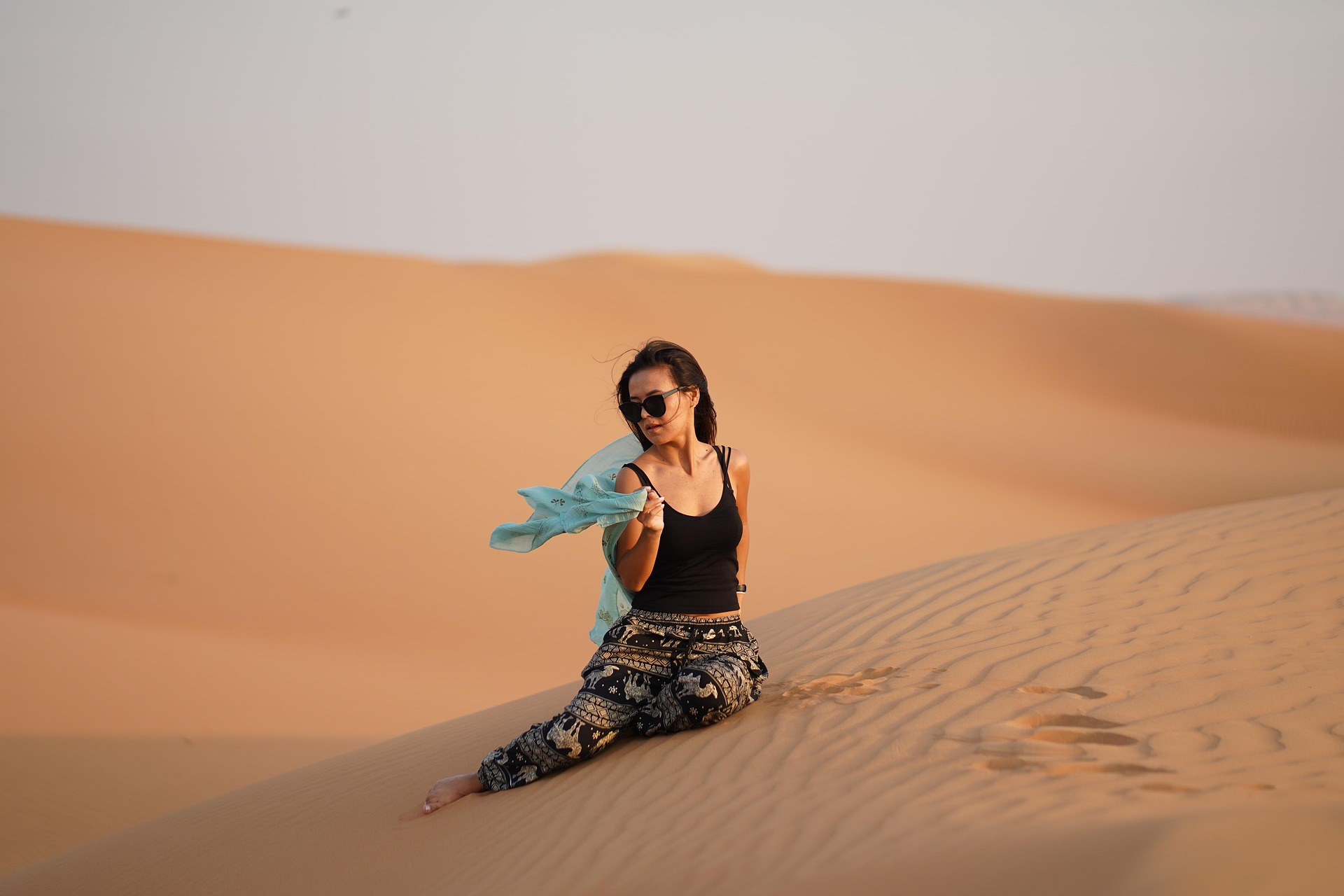
Light, loose-fitting top — Cotton, linen, or moisture-wicking synthetic. Light colours (white, beige, pastels) reflect sunlight. Avoid black.
Comfortable trousers or knee-length shorts — Loose fit. Cotton or linen. Avoid denim — it traps heat and dries slowly.
Underwear that handles sweat — Moisture-wicking fabric prevents chafing in the heat. Cotton underwear absorbs sweat and stays wet.
For detailed outfit guidance by body section, gender, and activity, see our full clothing guide.
Sport sandals with ankle straps (Tevas, Chacos, or similar) — Easy on and off, secure during dune bashing, sand-friendly. OR:
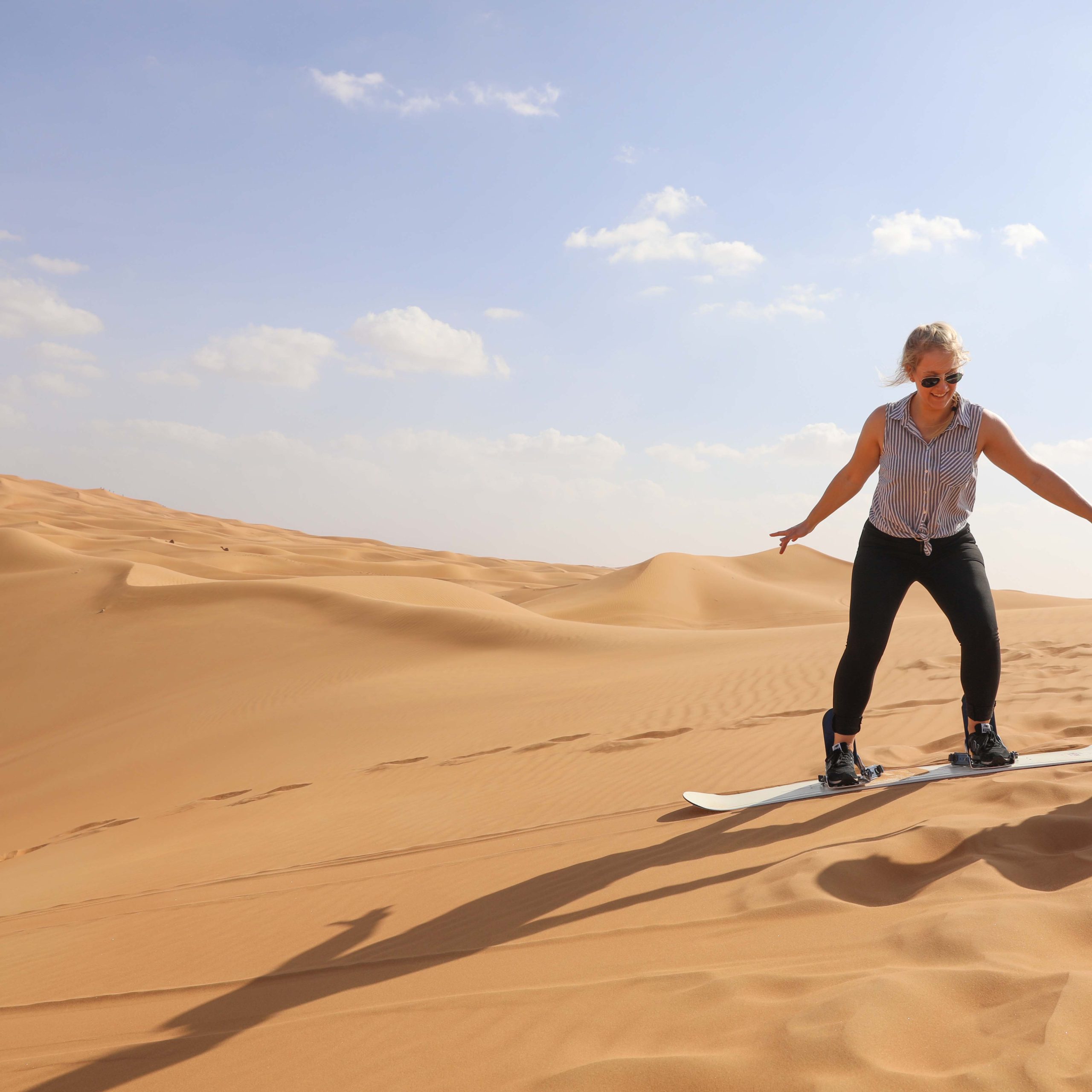
Lightweight sneakers/trainers — Closed-toe protection for quad biking and sandboarding. Choose a pair you do not mind getting sandy.
Skip: Flip-flops (fly off during dune bashing), heels (useless in sand), and new white shoes (they will not stay white).
💧 Hydration
Reusable water bottle — Most operators provide water, but having your own means you stay hydrated between stops. A 500ml–750ml bottle fits easily in a daypack.
Avoid: Sugary drinks and caffeine before the safari — both accelerate dehydration.
📱 Tech and Accessories
Phone (fully charged) — Your camera, map, and emergency contact rolled into one.
Portable power bank — Desert camps rarely have charging points. A 10,000mAh bank gives you a full extra charge.
Small crossbody bag or daypack — Keeps your hands free and your belongings secure during dune bashing. Anything loose in the vehicle will bounce around the cabin.
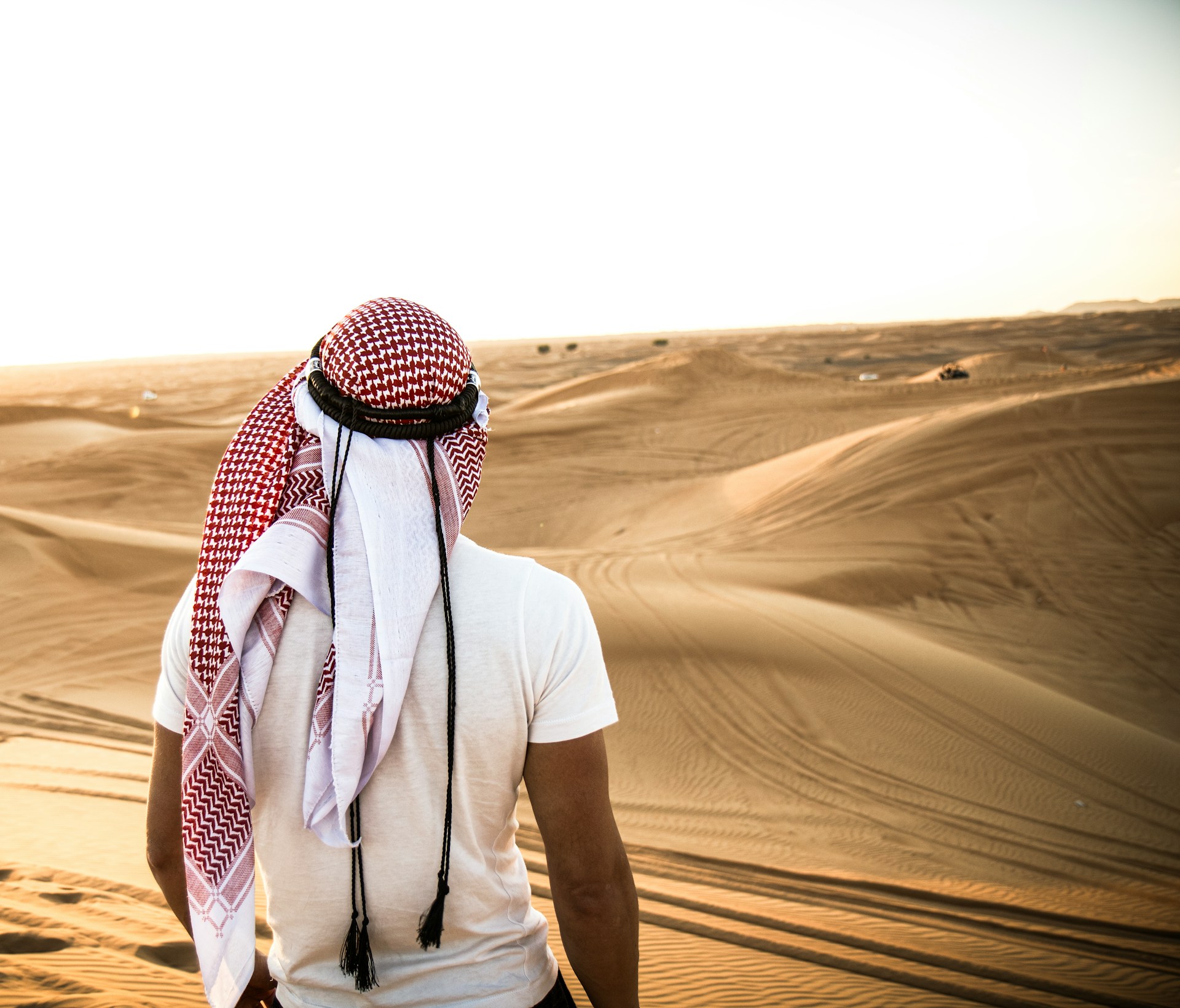
Scarf or buff — Covers your face during sandy wind, protects your neck from sun, and doubles as an evening layer. One of the most versatile items you can bring.
Hair ties — If you have long hair, tie it back before the dune drive. Sand and wind create tangles that take real effort to undo.
🧴 Personal Care
Wet wipes — Hands, face, phone screen, sunglasses. The single most useful item after water.
Hand sanitiser — Especially useful before eating at the BBQ camp.
Any personal medication — Bring enough for the full trip. Inform your operator about allergies or conditions at booking.
Motion sickness medication — If you have any history of car sickness, take dimenhydrinate (Dramamine) or meclizine 30–60 minutes before dune bashing. Available without prescription at Dubai pharmacies.
Tissues or a small travel pack of toilet paper — Budget camps have basic facilities. Be prepared.
What to Add by Safari Type
The essentials above cover every safari. These are the extras specific to your booking.
🌅 Morning Safari Additions
Morning safaris run from roughly 6:00–8:00 AM pickup to 11:00 AM–12:00 PM return. You are in direct sun for most of the experience.
Add These Items:
Extra sunscreen — You will need to reapply at least once during a morning safari
Light snack — You leave your hotel early and there is no meal included. A granola bar or crackers prevent low blood sugar during dune bashing
Water (extra) — Bring more than you think. Morning heat builds fast, especially May–September
🌇 Evening Safari Additions
Evening safaris run from 3:00–3:30 PM pickup to 9:00–10:00 PM return. You experience both heat and cooling temperatures.
Add These Items:
Light jacket, hoodie, or cardigan — Temperatures drop 10–15°C after sunset between November and March. This catches most first-time visitors off guard.
A change of shirt (optional) — After dune bashing and sandboarding, a fresh top makes the BBQ dinner more comfortable
Cash (small amount) — Some camps sell souvenirs, extra shisha flavours, or photo packages. AED 50–100 covers any impulse purchases
⭐ Overnight Safari Additions
Overnight safaris run from 2:00–3:30 PM pickup to 8:30–10:00 AM return the next day. You need everything from the evening list plus items for sleeping in the desert.
Add These Items:
Warm layer (fleece or hoodie) — Desert nights between November and February drop to 12–16°C. You will want more than a light cardigan.
Comfortable sleeping clothes — A t-shirt and loose pants you can sleep in. You will not want to sleep in the clothes you wore during dune bashing.
Travel-size toiletries — Toothbrush, toothpaste, face wash, deodorant. Camps provide bedding but not personal care items.
Earplugs — The desert is silent. Your fellow campers may not be. This is the single most underrated overnight item.
Small towel — Budget camps do not provide towels. A quick-dry microfibre towel packs flat and weighs nothing.
Portable power bank (essential, not optional) — Most camps have no power outlets in sleeping areas. You need your phone for a morning alarm and sunrise photos.
Moisturiser — Desert air is dry. Your skin will feel tight and dry by morning without it.
Warm socks — For sleeping. Desert sand radiates heat during the day but the ground cools fast after midnight.
Every item on this list has a reason. These are not arbitrary rules — they are lessons from thousands of safari trips.
Item
Why to Leave It Behind
Expensive jewellery
Sand scratches metal and gemstones. Desert heat makes metal rings and bracelets hot enough to burn skin. If it falls off in the sand, it is gone.
Perfume or strong scent
Fragrance attracts insects at the evening camp. The combination of sweet scent and warm evening air draws flies and mosquitoes directly to you.
Large backpack or heavy bag
You do not need it and there is limited vehicle space. A small crossbody bag or daypack is enough. Bulk gets in the way during every activity.
Laptop or tablet
No use case on a safari. Sand and electronics do not mix. No power to charge at most camps. Risk of damage is high.
Drone
Dubai requires DCAA registration and a No Objection Certificate. Most operators prohibit personal drones on group safaris. You risk confiscation and fines.
Brand-new white shoes
They will not stay white. Desert dust stains permanently. Wear shoes you do not mind getting dirty.
Denim jeans
Heavy, slow to dry, and trap body heat. Uncomfortable within 30 minutes in desert temperatures.
High heels or dress shoes
Sand is not a solid surface. You will sink, stumble, and regret it.
Excessive cash or valuables
Leave them in your hotel safe. The camp is secure, but vehicles bounce hard during dune bashing and items can be lost.
Anything you cannot wash
Fine desert sand gets into every fold, seam, and pocket. If the item cannot go through a washing machine, do not bring it.
Post-Safari Care: Dealing with Sand and Sun
No guide covers this, but everyone needs it. Here is how to handle yourself and your gear after the safari.
🚿 Your Skin
Immediate Care:
Shower as soon as you return to your hotel. Desert sand is fine and abrasive. Leaving it on your skin overnight causes irritation and dryness.
Apply aloe vera or after-sun lotion if you caught any sunburn. Even mild redness benefits from moisturising treatment within a few hours.
Moisturise your face and hands. The combination of sun, wind, and dry air strips moisture from your skin. Your face and hands will feel tight and dry without after-care.
🎒 Your Gear
Cleaning Steps:
Shake out clothing and shoes outside before bringing them into your hotel room. Turning pockets inside out removes trapped sand.
Wipe your phone and camera with a dry microfibre cloth. Blow sand out of ports with a rocket blower (for cameras) or a gentle puff of air (for phones). Do not use compressed air — it can push sand further into crevices.
Check your bag zippers and pockets. Sand jams zippers. If a zip feels gritty, run it back and forth a few times gently before forcing it.
Wash sandy clothes separately from your other laundry. Desert sand can scratch delicate fabrics in a shared wash cycle.
📱 Your Phone
⚠️ Critical Phone Care
Clean the charging port. Fine sand in the USB-C or Lightning port is the most common post-safari tech issue. A wooden toothpick (not metal) gently removes trapped particles. Blow out remaining dust.
Wipe the camera lens. Your first post-safari photos will be hazy if you skip this. A microfibre cloth removes the dust film in seconds.
The essentials are: sunscreen (SPF 50+), sunglasses, a hat, a reusable water bottle, a light scarf, comfortable loose clothing in light colours, sport sandals or sneakers, a portable power bank, wet wipes, and hand sanitiser. Evening safaris also need a light jacket for after sunset. Overnight safaris need toiletries, sleeping clothes, earplugs, and a warm layer.
Do I need to bring water to a desert safari?
Operators provide water and soft drinks, but bringing your own reusable bottle ensures you stay hydrated between stops. This is especially important on morning safaris in summer, when temperatures climb fast and dehydration sets in before you feel thirsty.
Should I bring a camera or just use my phone?
Either works. Modern smartphones produce excellent desert photos, especially with HDR mode enabled. If you bring a camera, stick to one lens (a 24–70mm covers most situations) and do not change lenses in the desert — sand can damage the sensor permanently. Protect whichever device you bring with a sealed bag between shots.
What shoes are best for a desert safari?
Sport sandals with ankle straps (Tevas, Chacos) or lightweight sneakers are the best options. Closed-toe shoes are mandatory for quad biking. Avoid flip-flops (they fly off during dune bashing), heels (sand is not a solid surface), and brand-new white shoes (they will not stay white).
Do I need a jacket for an evening desert safari?
Between November and March, yes. Desert temperatures drop 10–15°C after sunset. By 8:00 PM, you will be sitting outdoors at the camp in 14–18°C weather. A light jacket, hoodie, or cardigan is enough — you do not need a heavy winter coat. Between April and October, a light long-sleeve top is sufficient.
What should I NOT bring to a desert safari?
Leave behind expensive jewellery (sand scratches it, heat makes metal burn), perfume (attracts insects at camp), large bags (no space, no need), denim (traps heat), drones (require permits and are usually prohibited on group safaris), and anything you cannot wash. The desert sand gets into everything.
Pack Light, Pack Right
The entire packing list for a desert safari fits in a small crossbody bag. Sunscreen, water, sunglasses, a scarf, your phone, a power bank, and wet wipes cover 90% of your needs. Add a jacket for evening safaris and toiletries for overnight, and you are done.
The desert does not reward heavy packing. It rewards preparation. Bring the right ten items instead of twenty wrong ones, and you will spend the trip enjoying the experience instead of managing your stuff.
Ready with your packing list?
Book your desert safari and experience Dubai's golden dunes properly prepared.